Safety issues concerning the personExpand
-
Getting lost
Preventative measures:
- Use door locks that are more difficult to open.
- Paint the entrance lock the same colour as the door to make it more difficult to identify.
- Install an infrared sensor or entry contact alarm to notify caregivers when the person is leaving the house.
- Have the person wear an ID bracelet or ID tag, or write contact information on his or her clothes.
- Have the person carry a tracking device, such as a mobile phone, Mobile Link (Senior Citizen Home Safety Association), or PortaLink (Chubb Hong Kong).
-
Falls
Preventative measures:
- Seek advice from a physiotherapist and choose suitable walking aids for the person.
- Use heavy furniture that can provide support when the person is falling.
- Seek advice from an occupational therapist and improve the home environment (more details in "Environment & Technology").
-
Overdoses
Preventative measures:
- Use seven-day pill boxes to store medications for the coming week.
- Store the remaining medications in a place where the person cannot reach, or lock up the medicines.
-
Missed doses
Preventative measures:
- Use pill boxes with an alarm function so the person will be reminded to take medications.
-
Overeating
Preventative measures:
- Store food in places where the person cannot reach, or lock up the food.
-
Missing meals
Preventative measures
- Use alarm clocks to remind the person to eat.
Home safetyExpand
Please see "Environment & Technology".
Safety issues for caregiversExpand
-
Physical aggressiveness
- Lock away all knifes, sharp scissors, sharp objects, and fragile things that could hurt the person and you.
- Avoid provoking the person. Leave the scene for a moment if the person or you begin to get emotional.
- Carry a mobile phone and save the numbers of family members inside. Call family members or the police if you need help.
-
Being pulled or pushed down by the person
- Do not provide physical support to the person unless you really have the strength to do so.
- Have a strong footing before you provide support to the person.
- Stand firmly before you take the next steps and be prepared to be pushed by the person if he or she does not like to receive help when you approach.
- Protect your head and neck if you are about to fall.
Occupational safety for caregiversExpand
-
Avoid muscular damage caused by repetitive actions
- Avoid doing repetitive actions for a long time.
- Use aids such as pill cutters and crushers, bathtub transfer boards, shower chairs, grab bars, safety rails, and electric hospital home-care beds.
- Seek advice from a physiotherapist if you feel any pain. Use protective equipment such as knee braces, ankle supports, wrist braces, abdominal binders, and back braces when recommended.
- Hire a maid or helper to assist you if needed.
Lifting and transferExpand
-
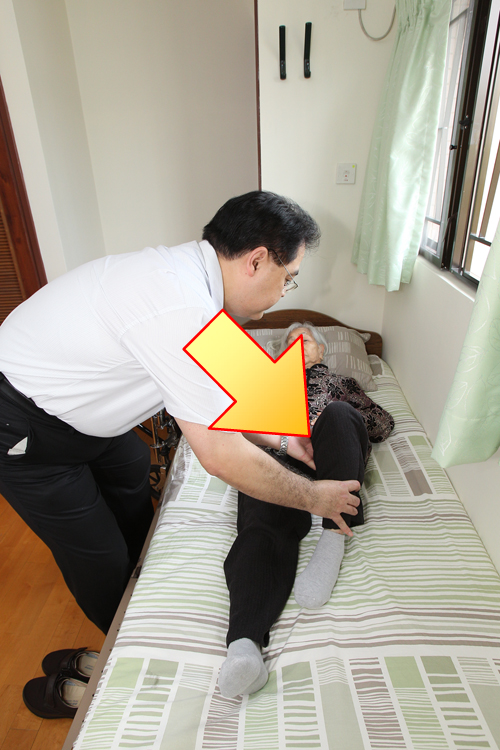
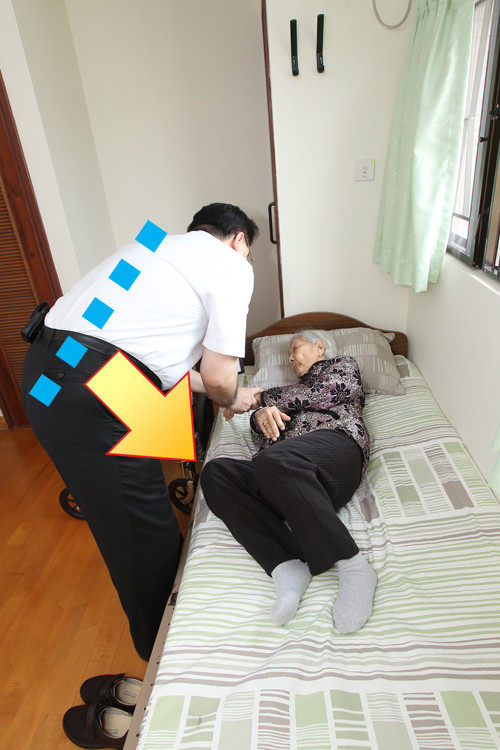
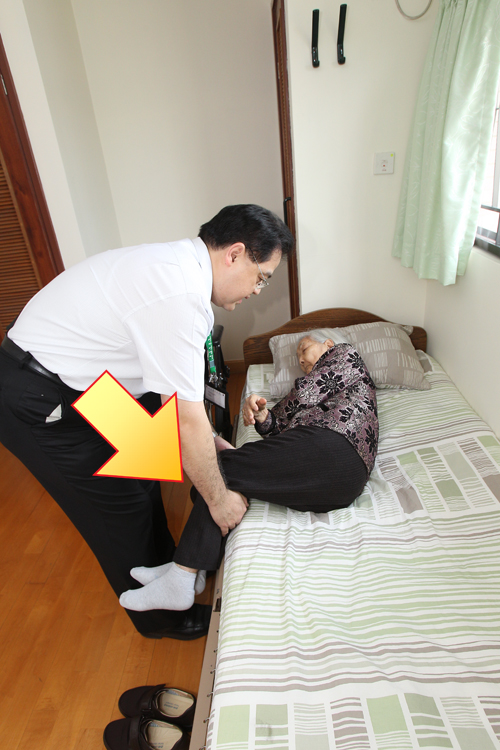
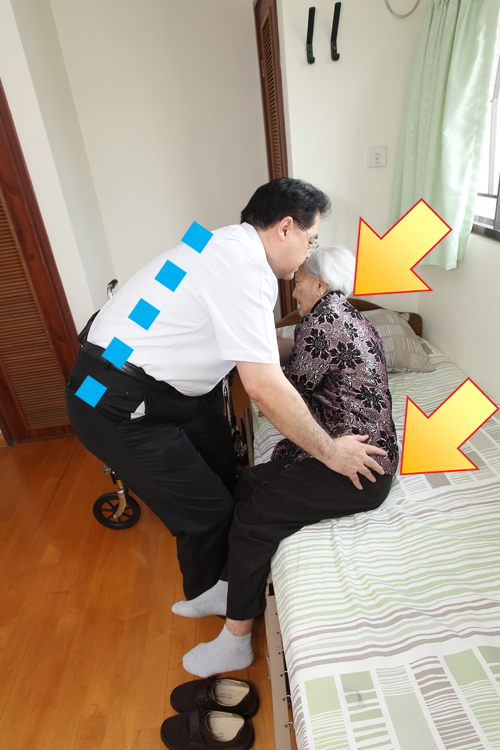
Rolling and lying to sitting
Aim: Help the person to get up from bed.
Steps:
- Bend the knees of the person.
- Put your hands over the shoulder and the pelvis of the person, help the person to roll and lie on his or her side slowly towards the edge of the bed while keeping your back and waist straight.
- Move the person's legs off the edge of the bed.
- Use one arm to hold the back of the neck and the shoulders of the person, and put the other arm over the person's thigh. Bend your knees a little bit. Tell the person to help lift up at the count of 3. On 3, lift the person up to a sitting position while keeping your back and waist straight at the same time.
- Hold the person until he or she can sit still. Keeping your back and waist straight all the time.
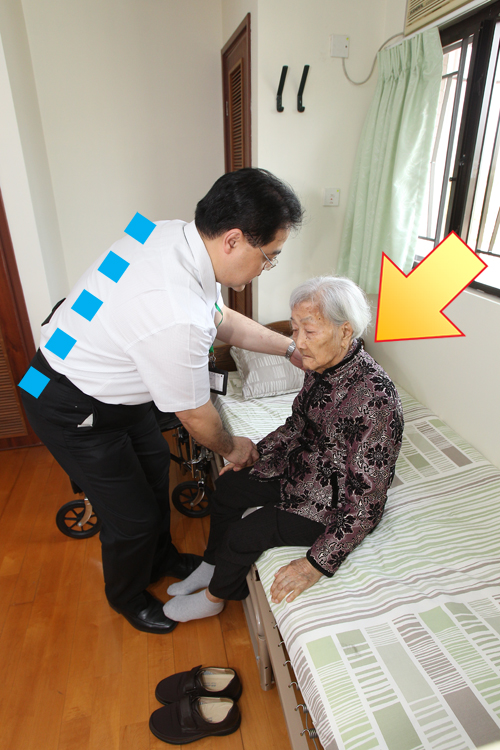
-
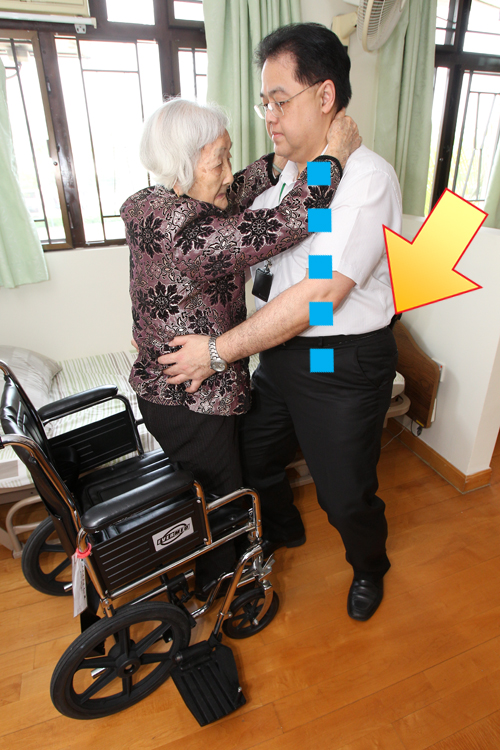
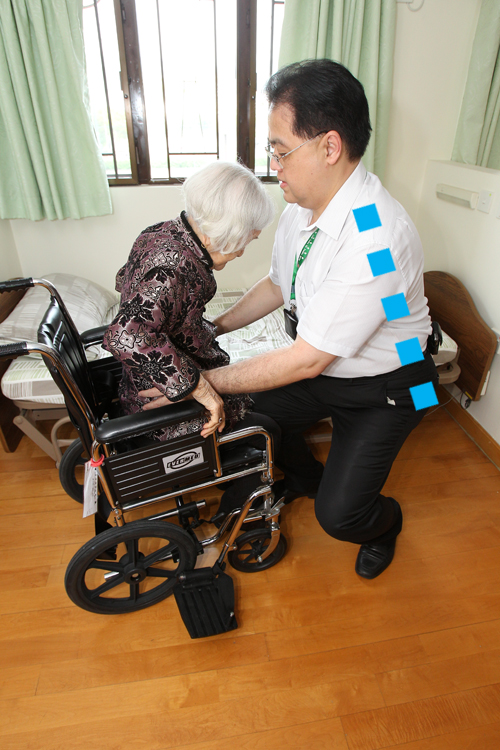
Shoulder hug
Aim: Help the person to go to other places.
Steps:
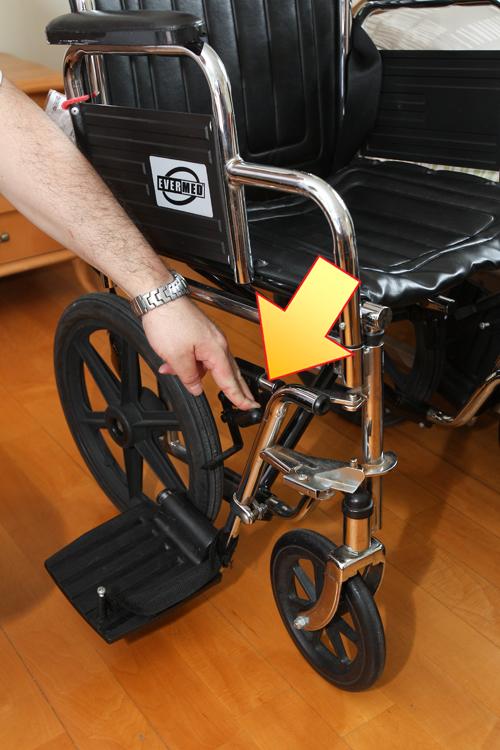
- Lock the wheelchair.
- Stand in front of the person, put one leg between the knees of the person and stand firmly. Make sure the feet of the person are on the ground.
- Ask the person to hook his or her arms around the back of your neck. Bend your knees a little bit while holding the pelvis of the person.
- Tell the person to help lift up at the count of 3. On 3, use the muscles of your lower limbs to lift and transfer the person slowly while keeping your back and waist straight.
- Help the person to position himself or herself in front of the wheelchair. Assist him or her to sit on the wheelchair while keeping your back and waist straight.
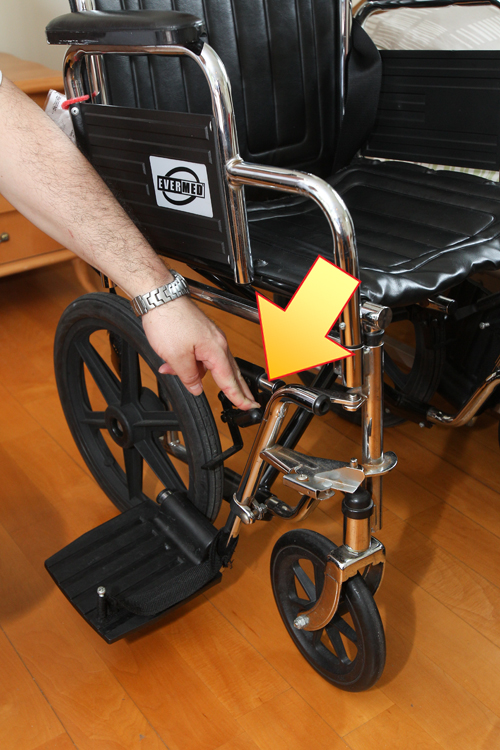
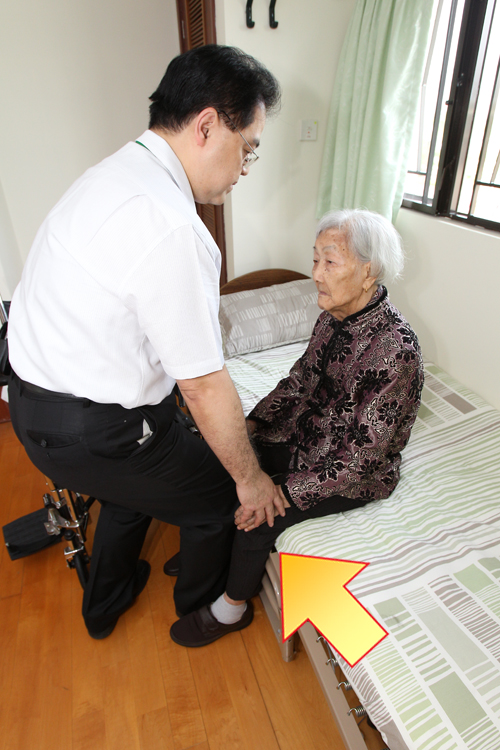
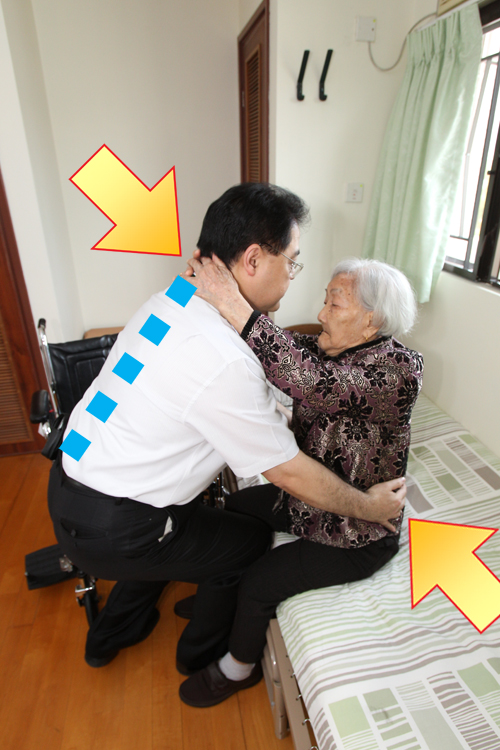
-
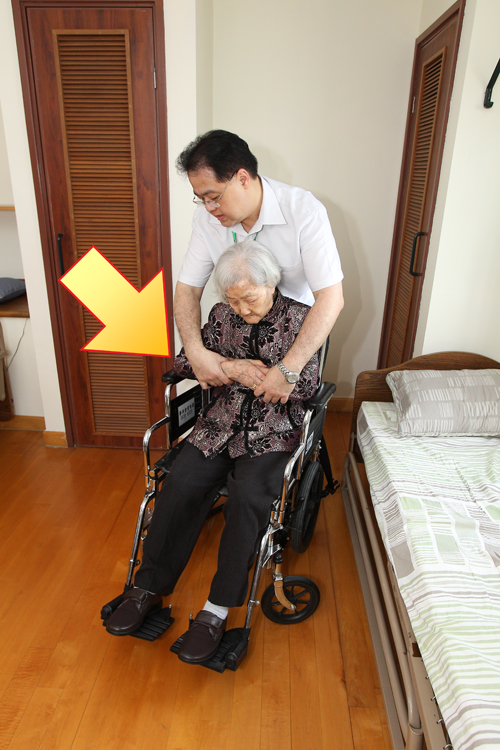
Underarm grip
Aim: Help the person to sit straight.
Steps:
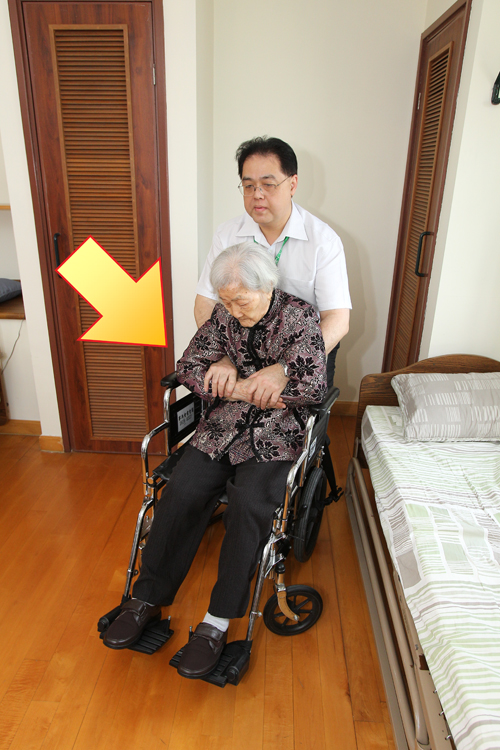
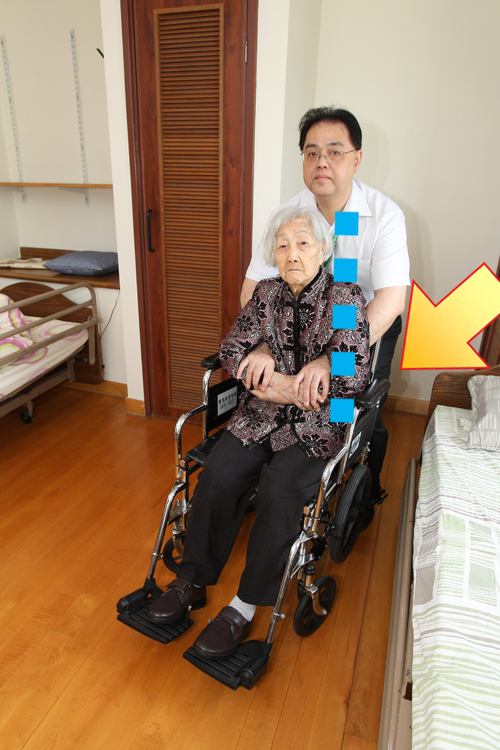
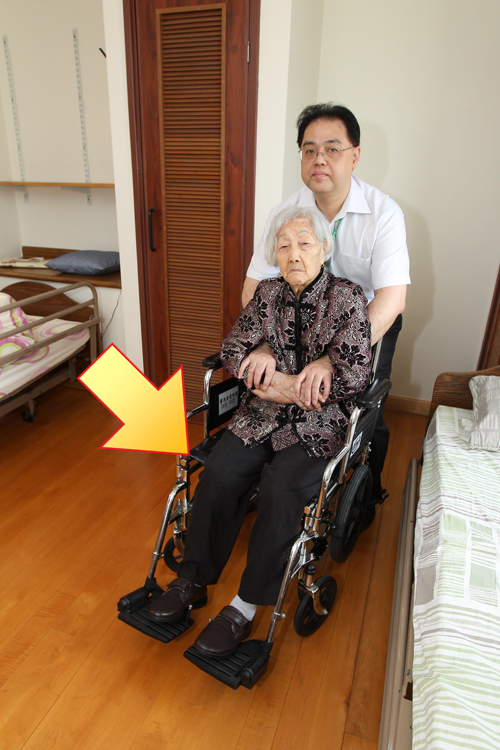
- Lock the wheelchair.
- Ask the person to cross his or her arms, and then stand firmly behind the person.
- Cross your arms around the chest of the person through his or her armpits. Hold the person's left wrist with your right hand and the right wrist with your left hand.
- Bend your knees a little bit. Tell the person to help lift up at the count of 3. On 3, use all of your muscles to lift the person while keeping your back and waist straight.
- Make sure the person is sitting on the wheelchair before you release your hands.
Using a wheelchairExpand
-
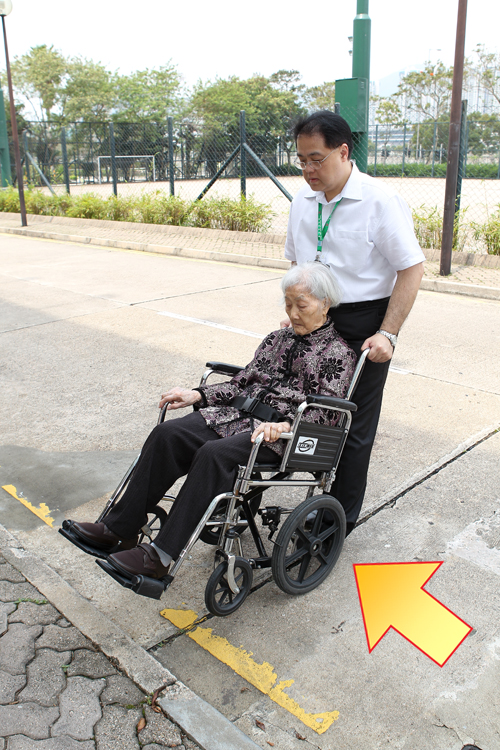
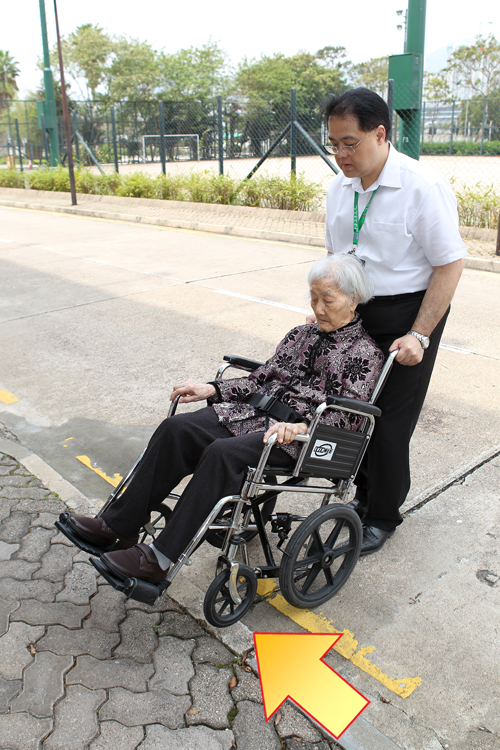
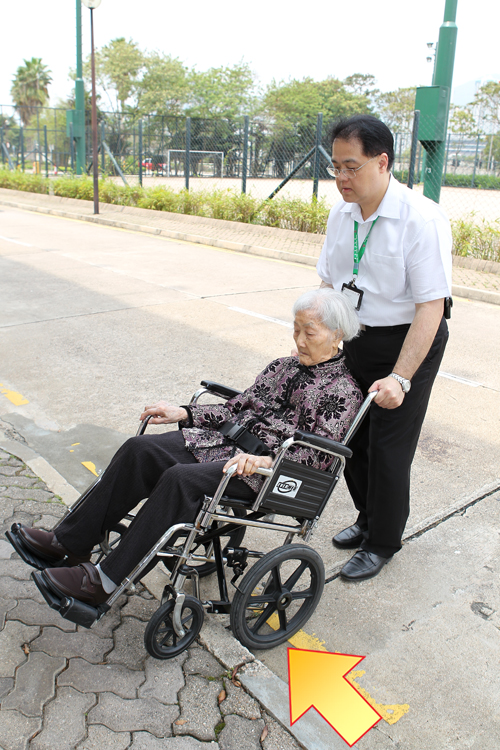
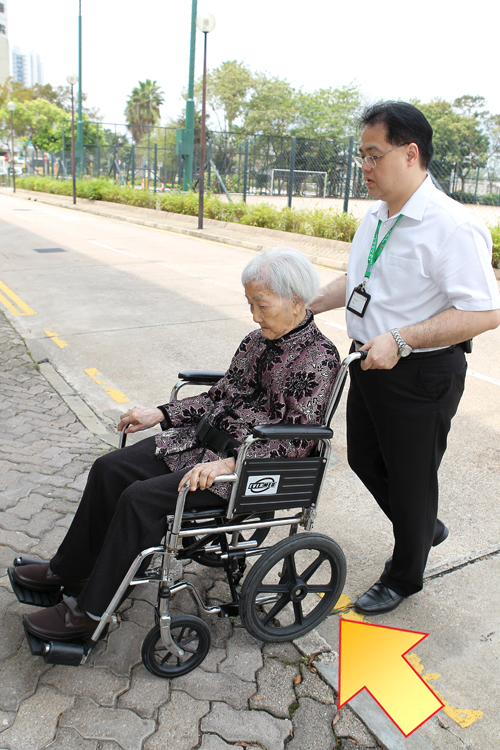
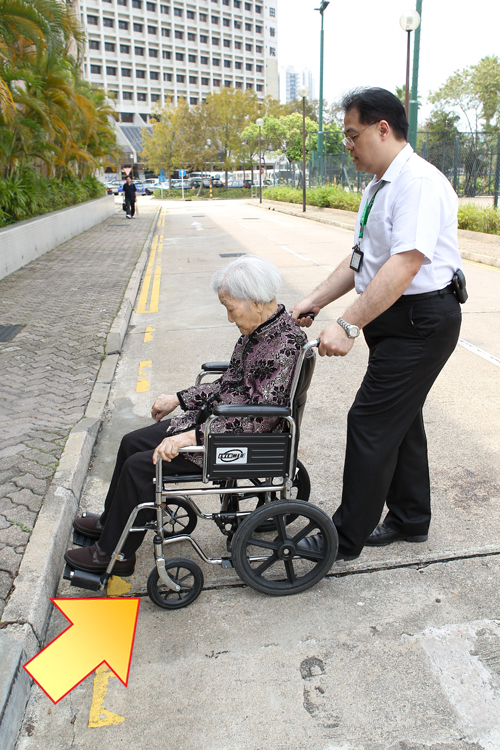
Climbing a curb
Steps:
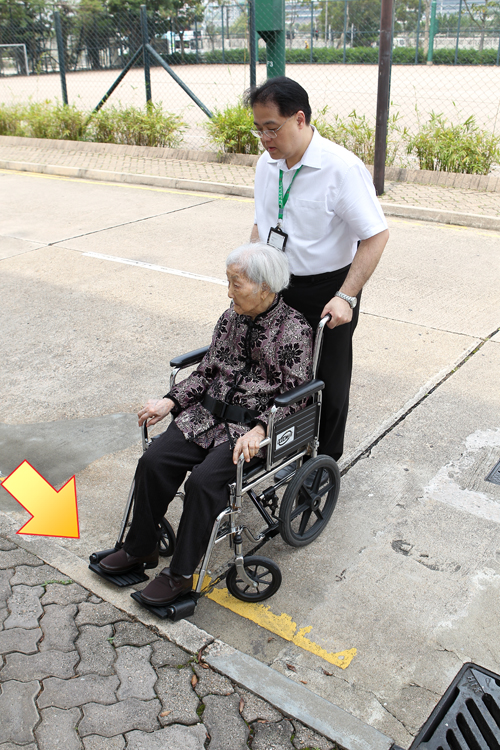
- Push the wheelchair to the edge of the curb so the front casters touch the curb.
- Put one foot on the step tube to lift the front casters.
- Push the wheelchair forward and place the front casters on the curb.
- Push the wheelchair forward until the rear wheels touch the curb.
- Stand firmly, and bend your knees a little bit. Use the muscles in your lower limbs to lift and push the wheelchair over the curb.
-
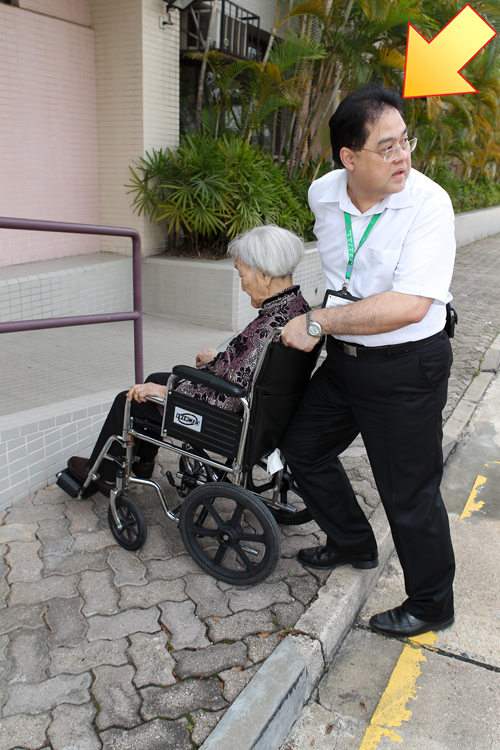
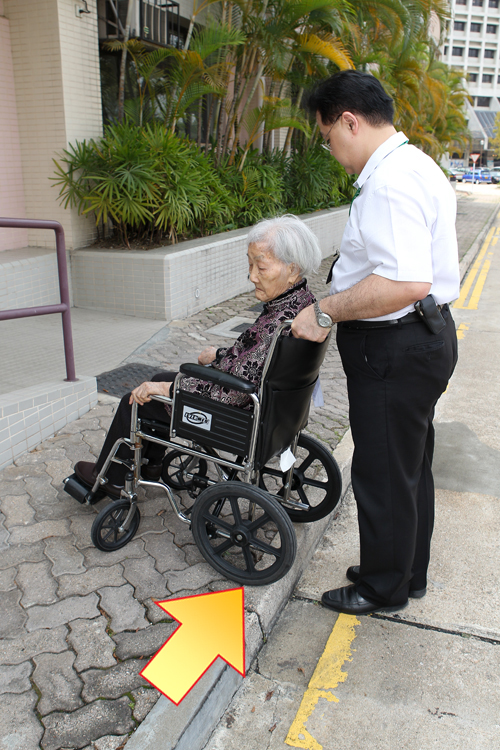
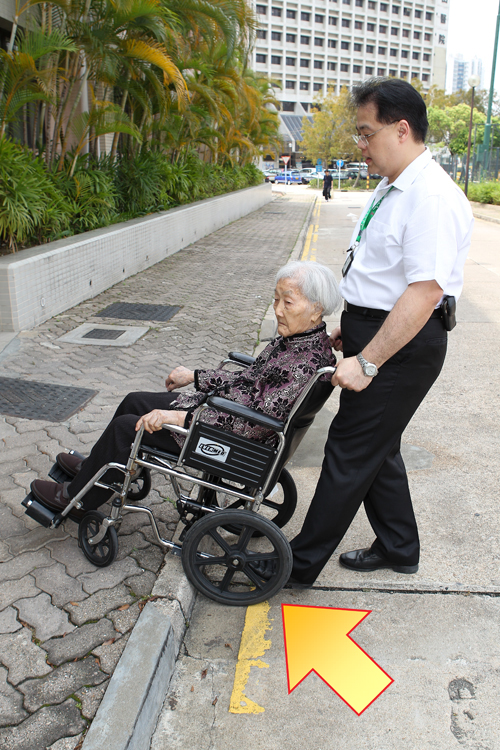
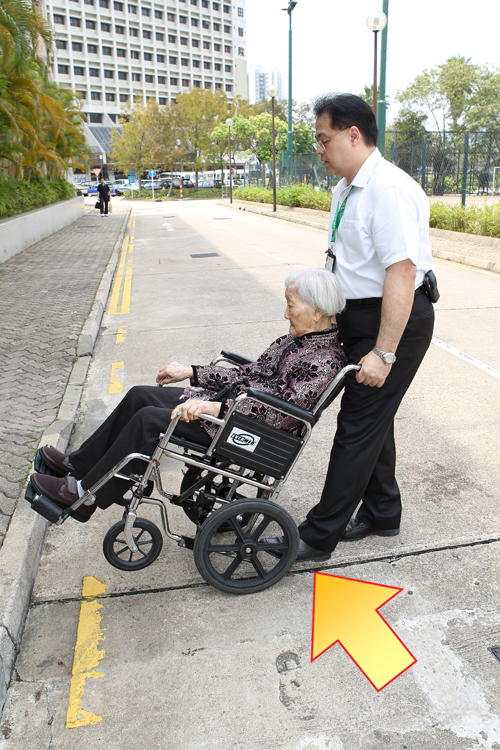
Going down from a curb
Steps:
- Look behind and make sure it is safe.
- Pull the wheelchair until the rear wheels reach the edge of the curb.
- Use the muscles in your lower limbs to pull the rear wheels off the curb slowly. Support the wheelchair by putting one foot on the back of the wheelchair, or putting one foot on the step tube to control the action if needed.
- Put one foot on the step tube to balance the wheelchair while lifting the front casters and pulling the wheelchair off the curb. Pull the wheelchair until the front casters reach the edge of the curb first if needed.
- Continue to put the foot on the step tube until the front casters is rested on the ground.
-
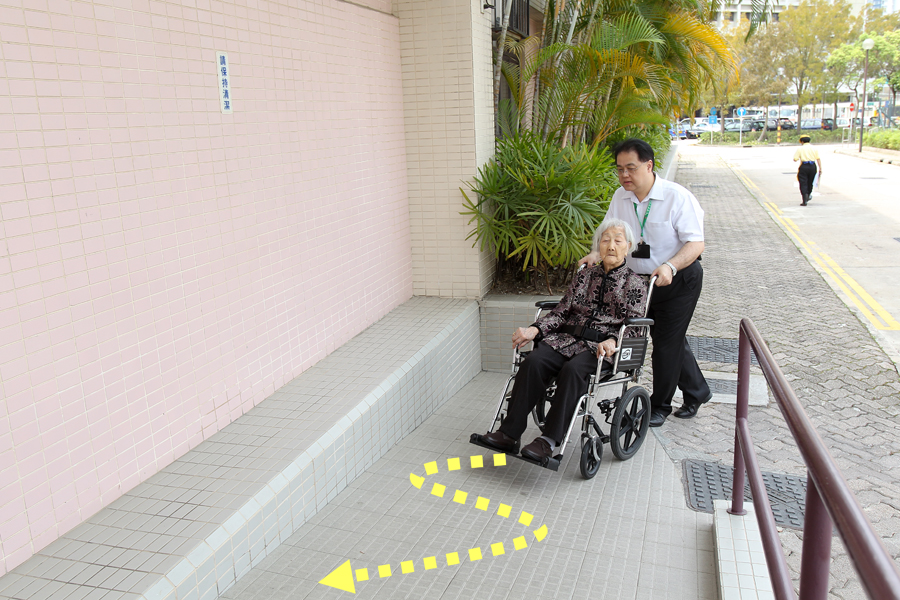
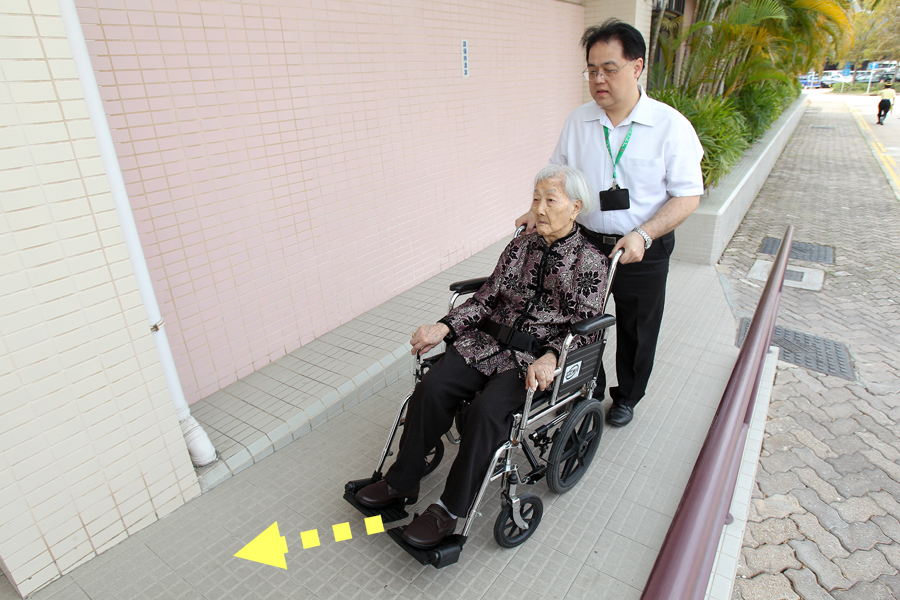
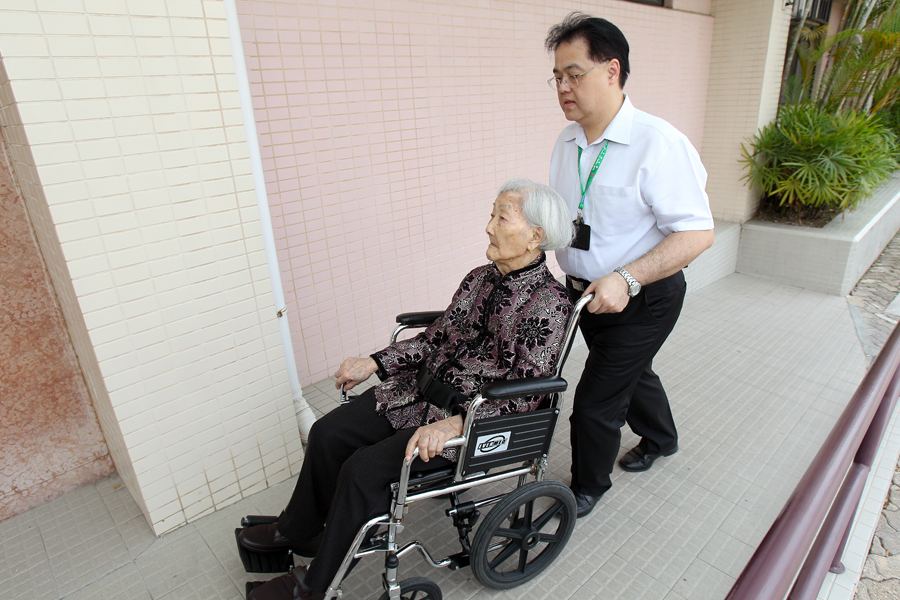
Going up a slope
Push the wheelchair up the slope from the rear. Push in an S-shaped route to conserve energy if needed.
-
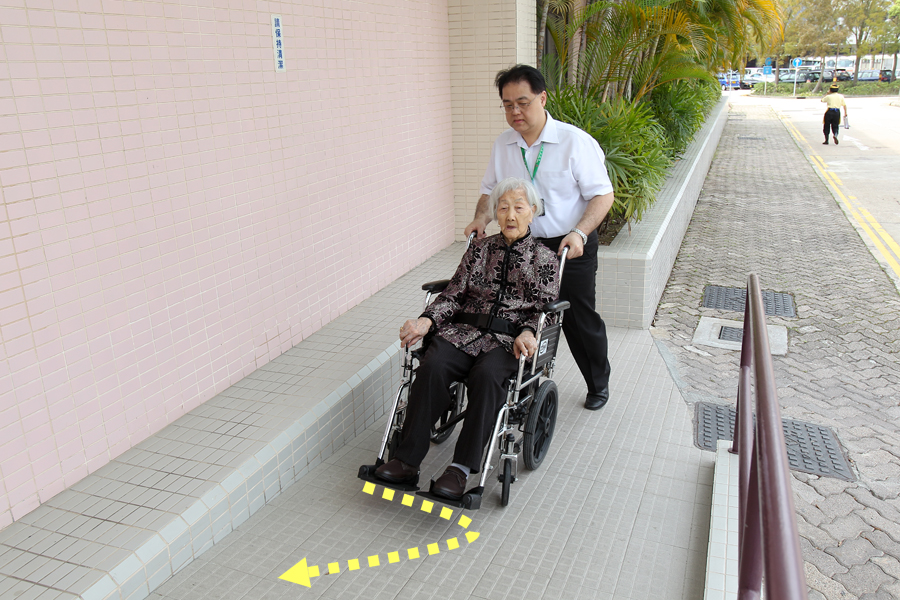
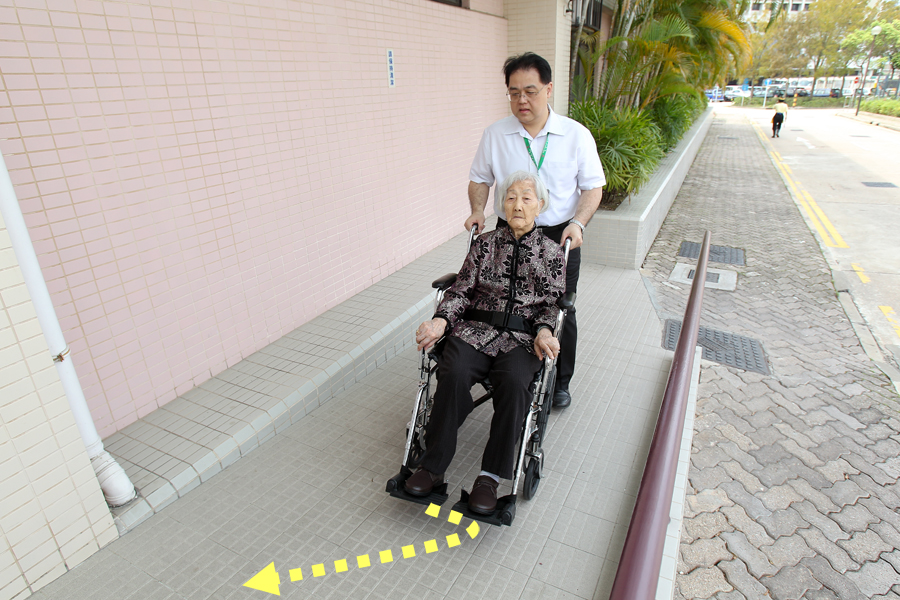
Going down a slope
Use the adjustable gears to slow down the wheelchair if this function is available. Pull the wheelchair down the slope from the back with the person facing the higher end of the slope. Keep checking the way behind your back to play safe.
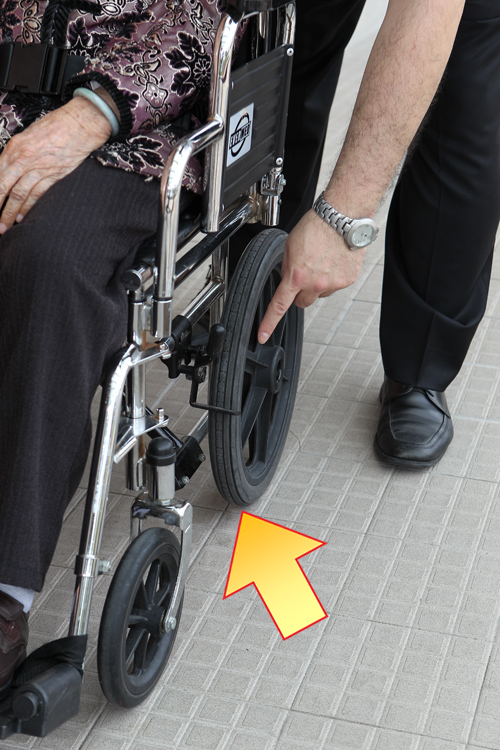
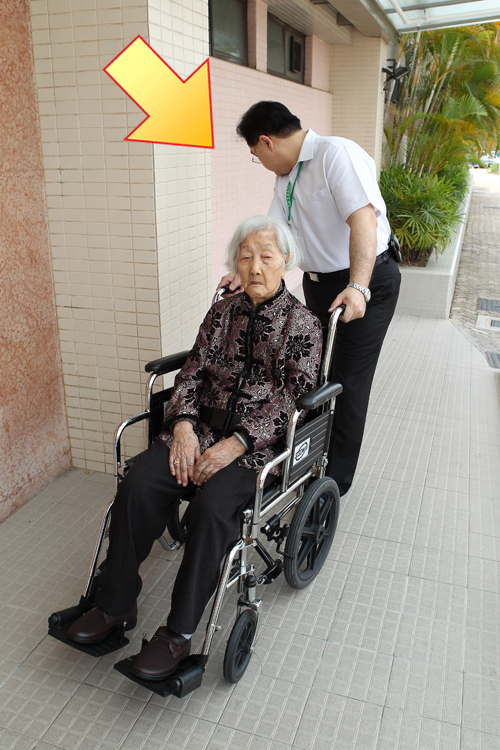
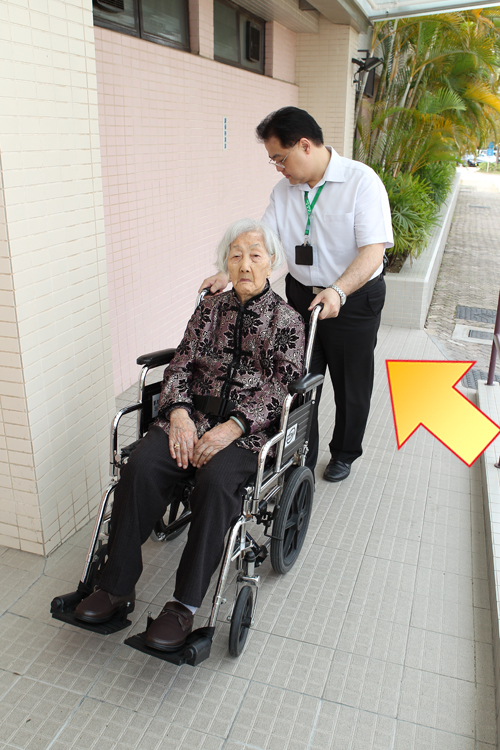
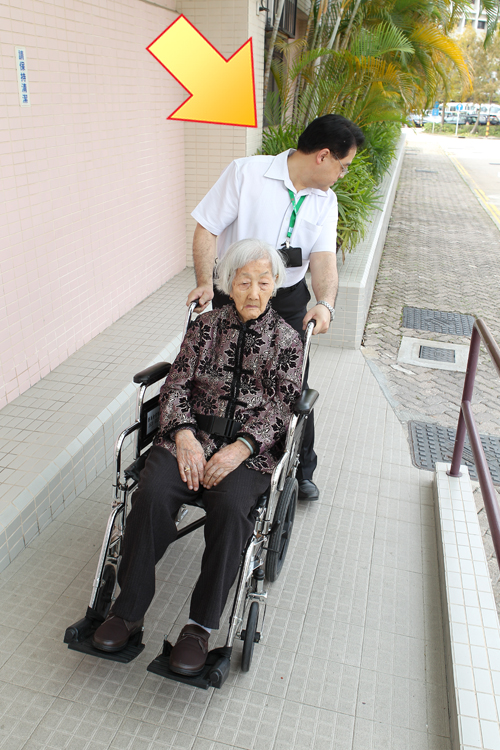
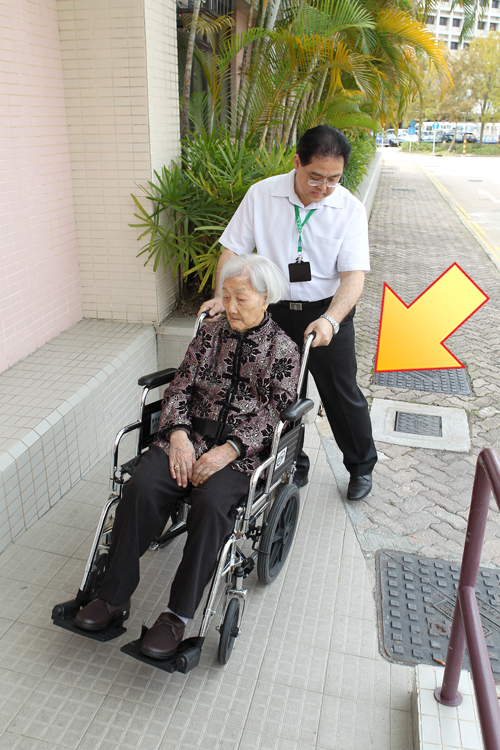
Do not push a wheelchair parallel to the long holes in drain covers. Otherwise, the wheels may become stuck.